Everguard Insulation

How Insulation Works

Low price guarantee
Lifetime guarantee

Cooler in the Summer AND Warmer in the Winter!

Insulation is a thermally resistant barrier which inhibits the migration of thermal energy into and out of the house. In simple terms: Insulation is a barrier that seals your home, keeping the inside in and the outside out. The cool or warm air that your AC works hard to produce stays inside the home, keeping you comfortable, while the unwanted cold or hot temperatures outdoors stay outdoors! The results are a cooler home in the summer, warmer home in the winter, and lower energy bills. It’s that simple and it really works. Insulation is so effective that its cost is often paid for through energy savings in less than a year…and with the rising cost of natural gas and electricity, savings may come even sooner.

Homeowners often complain of an air conditioning system that runs all day and never cools the house below 80 degrees. This is typical of a poorly insulated home; the heat is entering the home at about the same rate as your air conditioning can cool it. When we insulate homes during hot days, customers often notice an immediate difference and frequently describe the feeling as though a huge shady cloud came over their home.

Insulation is a thermally resistant barrier which inhibits the migration of thermal energy into and out of the house. In simple terms: Insulation is a barrier that seals your home, keeping the inside in and the outside out. The cool or warm air that your AC works hard to produce stays inside the home, keeping you comfortable, while the unwanted cold or hot temperatures outdoors stay outdoors! The results are a cooler home in the summer, warmer home in the winter, and lower energy bills. It’s that simple and it really works. Insulation is so effective that its cost is often paid for through energy savings in less than a year…and with the rising cost of natural gas and electricity, savings may come even sooner.

Homeowners often complain of an air conditioning system that runs all day and never cools the house below 80 degrees. This is typical of a poorly insulated home; the heat is entering the home at about the same rate as your air conditioning can cool it. When we insulate homes during hot days, customers often notice an immediate difference and frequently describe the feeling as though a huge shady cloud came over their home.

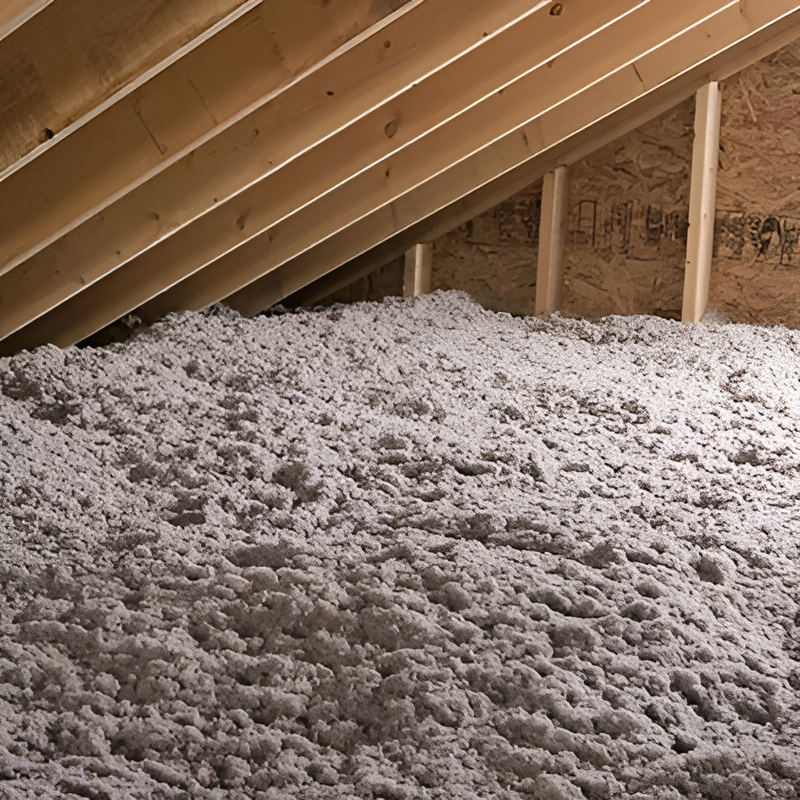
Loose-fill cellulose attic insulation filling the space between wooden rafters for energy efficiency.

Insulation Placement

Why insulation goes on the floor of the attic and not on the underside of the roof:

Attic insulation should be installed directly on the floor of the attic, which is your ceiling. This is because you are heating and cooling the area below the ceiling, where you live.

If you were to put insulation under the roof, then in the Winter, heat would wastefully rise into your attic area where it would be readily lost through attic ventilation. During the Summer, it would seem like a good idea to also insulate the underside of the roof in an effort to keep the attic cooler, but the roof rafters are limited in being able to hold either R13 or R19 rolled Fiberglass, which is not enough to be effective at its job. Also, your roofing material will get hotter because the heat won’t be able to ventilate underneath. Most roofing warranties are void unless you have adequate attic ventilation.

A well insulated attic (insulation installed on the floor), brought up to R38, should sufficiently work to keep the inside of the home comfortable. To further help in the Summer, you could install additional attic ventilation to allow heat to escape and keep the attic cooler. For homeowners who really want some form of additional insulation under their roofing, we can install Radiant Barrier which will help reflect/refract heat energy and serve to keep the attic cooler and A/C ducts cooler.

Please note that Radiant Barrier is best installed prior to insulating. For more details, visit our Radiant Barrier service page to learn how it helps improve energy efficiency and indoor comfort.

Why insulation goes on the floor of the attic and not on the underside of the roof:

Attic insulation should be installed directly on the floor of the attic, which is your ceiling. This is because you are heating and cooling the area below the ceiling, where you live.
If you were to put insulation under the roof, then in the Winter, heat would wastefully rise into your attic area where it would be readily lost through attic ventilation. During the Summer, it would seem like a good idea to also insulate the underside of the roof in an effort to keep the attic cooler, but the roof rafters are limited in being able to hold either R13 or R19 rolled Fiberglass, which is not enough to be effective at its job. Also, your roofing material will get hotter because the heat won’t be able to ventilate underneath. Most roofing warranties are void unless you have adequate attic ventilation.

A well insulated attic (insulation installed on the floor), brought up to R38, should sufficiently work to keep the inside of the home comfortable. To further help in the Summer, you could install additional attic ventilation to allow heat to escape and keep the attic cooler. For homeowners who really want some form of additional insulation under their roofing, we can install Radiant Barrier which will help reflect/refract heat energy and serve to keep the attic cooler and A/C ducts cooler.


Please note that Radiant Barrier is best installed prior to insulating. For more details, visit our Radiant Barrier service page to learn how it helps improve energy efficiency and indoor comfort.

Additional Benefits of Insulation

A well insulated home means the air conditioning and furnace system work more effectively, and thus run less often. Besides saving money on heating and cooling bills, the air inside the house does not get processed and cycled as much through your HVAC system, which means the air does not get nearly as dried out.

Insulation also serves to reduce outside sound from entering the home. People near airports, schools, or high traffic areas often report dramatically less sound disturbance and most people describe the home as having a more solid feeling to it. See our Soundproofing page for more info!

The non-flammable nature of Cellulose and Rockwool insulation offers a notable degree of fire protection to the home. These blown-in products can make all the difference in the safety of you and your home – allowing for more time to evacuate and more time for firefighters to respond in case of emergency. The insulation becomes a “hard-target” that the fire has to burn around, thus slowing the spread of fire by 57% for Cellulose, or significantly more for Rockwool. In testing, a well insulated home remained structurally intact and standing significantly longer than a non-insulated or Fiberglass insulated home.

Also, because Cellulose and Rockwool are treated with a natural, safe chemical known as Borate / Boric acid, the material is resistant to pests, rodents, mold, and mildew. There’s even a reduction in condensation on ceilings and walls. Additionally, these materials are made of all natural ingredients which makes them eco-friendly and human-friendly. They’re safe to be around, touch, breathe in – and a great choice for those with allergies, asthma, and immune compromise.

A well insulated home means the air conditioning and furnace system work more effectively, and thus run less often. Besides saving money on heating and cooling bills, the air inside the house does not get processed and cycled as much through your HVAC system, which means the air does not get nearly as dried out.

Insulation also serves to reduce outside sound from entering the home. People near airports, schools, or high traffic areas often report dramatically less sound disturbance and most people describe the home as having a more solid feeling to it. See our Soundproofing page for more info!

The non-flammable nature of Cellulose and Rockwool insulation offers a notable degree of fire protection to the home. These blown-in products can make all the difference in the safety of you and your home – allowing for more time to evacuate and more time for firefighters to respond in case of emergency. The insulation becomes a “hard-target” that the fire has to burn around, thus slowing the spread of fire by 57% for Cellulose, or significantly more for Rockwool. In testing, a well insulated home remained structurally intact and standing significantly longer than a non-insulated or Fiberglass insulated home.

Also, because Cellulose and Rockwool are treated with a natural, safe chemical known as Borate / Boric acid, the material is resistant to pests, rodents, mold, and mildew. There’s even a reduction in condensation on ceilings and walls. Additionally, these materials are made of all natural ingredients which makes them eco-friendly and human-friendly. They’re safe to be around, touch, breathe in – and a great choice for those with allergies, asthma, and immune compromise.

Blown (Loose-fill) vs. Rolled (Batting)

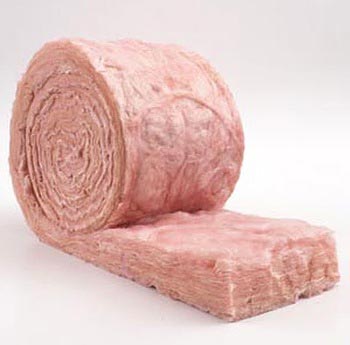
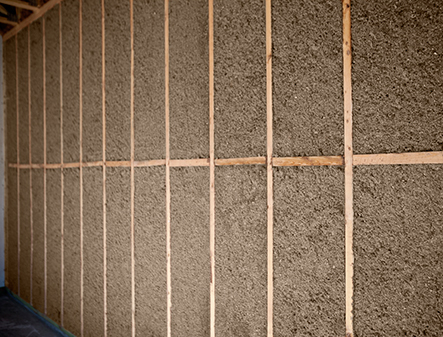
Fiberglass rolls (or batts) are useful in that they can be hung under floors or used in open-framing and in new construction situations. But once a home is built, it can either be rolled with batting OR blown with a loose-fill (blown-in Cellulose, Rockwool, or Fiberglass) material. A blown application offers several advantages over batting.

Many homeowners assume batting is better, or they’re drawn to what appears to be a cleaner job. Some homeowners are directed by their trusty contractor while others just feel a sense of familiarity towards the rolls. The truth of the matter is that rolled Fiberglass is often installed during construction merely because it’s convenient. When homeowners, contractors, or architects do some research, blown-in Cellulose or Rockwool insulation easily emerges as the best choice.

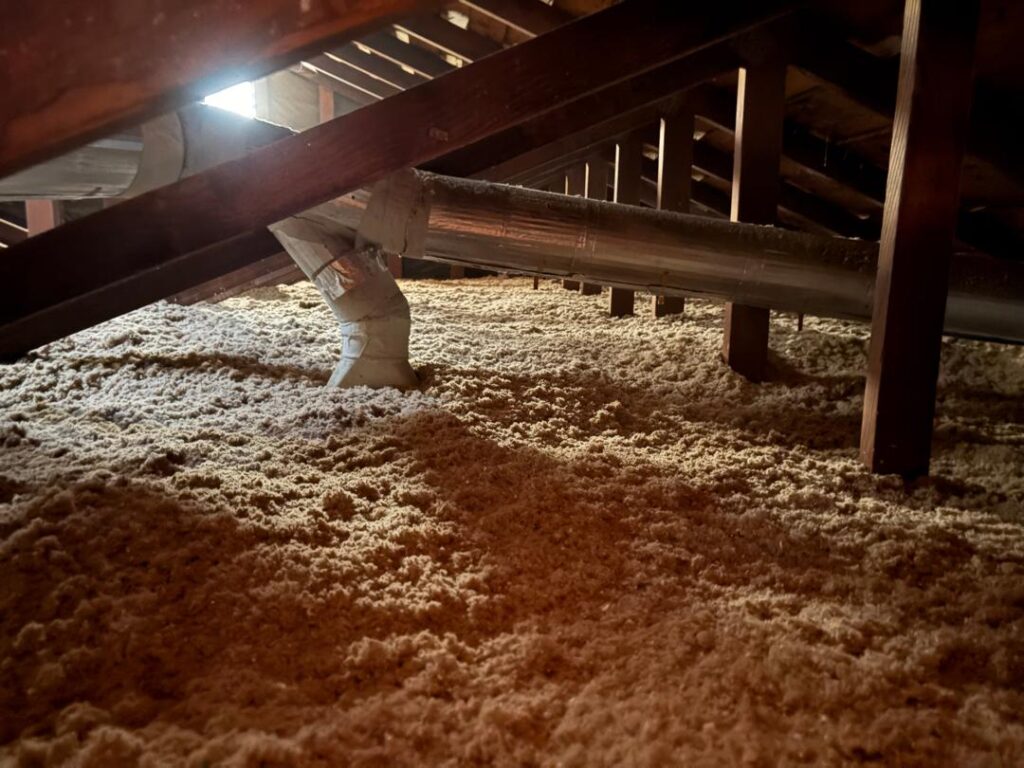
The downfall of rolled material is that it must be placed between each ceiling joist (wooden beams in the attic), sometimes fitting tightly, sometimes loosely. Rolled material must go over, under, and around the many obstacles in the attic such as plumbing, piping and electrical conduit; this application compromises the performance of the insulation by creating gaps, voids, and other leaks. The blown application seals and provides a much tighter blanket of insulation throughout the attic which is referred to as a monolithic fill – a technical term describing a continuous blanket of insulation that covers and seals over everything as a solid layer without gaps.

Attic insulation with ductwork, illustrating how insulation works in a home.

Another advantage of blowing insulation is that we “shoot” the material up to 20-feet in distance, allowing us to reach all the tight areas and deep corners that would otherwise not be accessible with batting, which is especially useful for less-accessible, low crawl attics. This method lessens the need for workers to move around your attic, thus reducing the potential for disturbing wiring or causing the ceiling to crack under pressure.

Studies at the University of Colorado have established that a blown-in insulation rated at R-19 provides equal performance to the same job done with R-30 batting. The flip side of this equation is that R-30 batting only renders an R19 in practical effectiveness. So while the rolled material is rated and stamped as R-30, it’s only offering a real performance of R-19.

Another problem arises when an attic already has old or existing insulation. Most homes, at one point or another, were insulated. Rolled material does not lay effectively over existing insulation; the result is a lot of voids, gaps, and a compromised fit. Because of this, only homes that have no existing insulation are candidates to be rolled with Fiberglass. Although there is the option to vacuum-out or remove the old insulation, this is time-consuming, expensive, and impractical – typically offering zero benefit at a high cost margin. The best thing to do is simply add more material on top of the existing insulation to bring the entire attic up to R-38. See our removal page for more info.

The most important benefit of blowing insulation is that it allows us to use Cellulose or Rockwool insulation instead of a Fiberglass product. Cellulose and Rockwool are by far more effective, longer lasting, and safer materials as compared to Fiberglass. Please see our materials comparison section for more details.
Blown (Loose-fill) vs. Rolled (Batting)

Fiberglass rolls (or batts) are useful in that they can be hung under floors or used in open-framing and in new construction situations. But once a home is built, it can either be rolled with batting OR blown with a loose-fill (blown-in Cellulose, Rockwool, or Fiberglass) material. A blown application offers several advantages over batting.

Many homeowners assume batting is better, or they’re drawn to what appears to be a cleaner job. Some homeowners are directed by their trusty contractor while others just feel a sense of familiarity towards the rolls. The truth of the matter is that rolled Fiberglass is often installed during construction merely because it’s convenient. When homeowners, contractors, or architects do some research, blown-in Cellulose or Rockwool insulation easily emerges as the best choice.

The downfall of rolled material is that it must be placed between each ceiling joist (wooden beams in the attic), sometimes fitting tightly, sometimes loosely. Rolled material must go over, under, and around the many obstacles in the attic such as plumbing, piping and electrical conduit; this application compromises the performance of the insulation by creating gaps, voids, and other leaks. The blown application seals and provides a much tighter blanket of insulation throughout the attic which is referred to as a monolithic fill – a technical term describing a continuous blanket of insulation that covers and seals over everything as a solid layer without gaps.

Another advantage of blowing insulation is that we “shoot” the material up to 20-feet in distance, allowing us to reach all the tight areas and deep corners that would otherwise not be accessible with batting, which is especially useful for less-accessible, low crawl attics. This method lessens the need for workers to move around your attic, thus reducing the potential for disturbing wiring or causing the ceiling to crack under pressure.

Studies at the University of Colorado have established that a blown-in insulation rated at R-19 provides equal performance to the same job done with R-30 batting. The flip side of this equation is that R-30 batting only renders an R19 in practical effectiveness. So while the rolled material is rated and stamped as R-30, it’s only offering a real performance of R-19.

Another problem arises when an attic already has old or existing insulation. Most homes, at one point or another, were insulated. Rolled material does not lay effectively over existing insulation; the result is a lot of voids, gaps, and a compromised fit. Because of this, only homes that have no existing insulation are candidates to be rolled with Fiberglass. Although there is the option to vacuum-out or remove the old insulation, this is time-consuming, expensive, and impractical – typically offering zero benefit at a high cost margin. The best thing to do is simply add more material on top of the existing insulation to bring the entire attic up to R-38. See our removal page for more info.

The most important benefit of blowing insulation is that it allows us to use Cellulose or Rockwool insulation instead of a Fiberglass product. Cellulose and Rockwool are by far more effective, longer lasting, and safer materials as compared to Fiberglass. Please see our materials comparison section for more details.

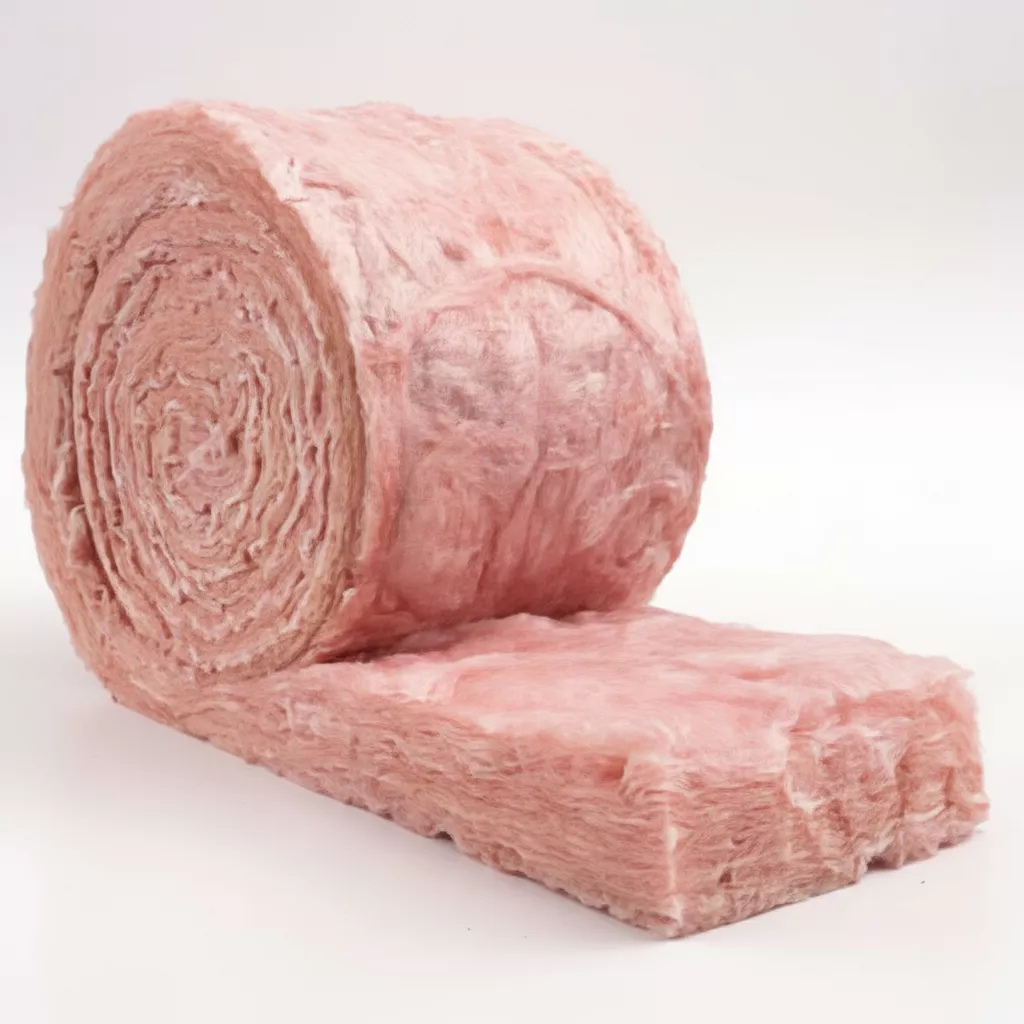
Rolled fiberglass insulation batting Blown-in insulation installed between wall framing

Cellulose vs. Fiberglass Studies by the University of Colorado

In a two-month study at the University of Colorado School of Architecture and Planning, researchers compared the energy-conservation efficiency of two test buildings, both with insulated walls and attic; One with Cellulose, and one with Fiberglass. Here are the results:
  • Cellulose achieved a denser volume of insulation in the building’s cavities, and cut air infiltration by at least 30% more than Fiberglass.
  • When heating was turned off at night over a 9 hour period, the Cellulose insulated building retained 7 degrees more heat than the Fiberglass.
  • It was estimated that in temperate climates, a Cellulose insulated building would require about 26% less energy to heat than a Fiberglass insulated building. It was further concluded that the energy benefit would become even more significant in severe climates.
  • Cellulose blown-in insulation reduced air leakage more effectively than Fiberglass batting or Fiberglass blown-in insulation.


Conclusion: Homes insulated with Cellulose insulation require considerably less energy to heat and cool than homes insulated with Fiberglass; Making Cellulose the better insulation.

Blown (Loose-fill) vs. Rolled (Batting)

Fiberglass rolls (or batts) are useful in that they can be hung under floors or used in open-framing and in new construction situations. But once a home is built, it can either be rolled with batting OR blown with a loose-fill (blown-in Cellulose, Rockwool, or Fiberglass) material. A blown application offers several advantages over batting.

Many homeowners assume batting is better, or they’re drawn to what appears to be a cleaner job. Some homeowners are directed by their trusty contractor while others just feel a sense of familiarity towards the rolls. The truth of the matter is that rolled Fiberglass is often installed during construction merely because it’s convenient. When homeowners, contractors, or architects do some research, blown-in Cellulose or Rockwool insulation easily emerges as the best choice.

The downfall of rolled material is that it must be placed between each ceiling joist (wooden beams in the attic), sometimes fitting tightly, sometimes loosely. Rolled material must go over, under, and around the many obstacles in the attic such as plumbing, piping and electrical conduit; this application compromises the performance of the insulation by creating gaps, voids, and other leaks. The blown application seals and provides a much tighter blanket of insulation throughout the attic which is referred to as a monolithic fill – a technical term describing a continuous blanket of insulation that covers and seals over everything as a solid layer without gaps.

Attic insulation with ductwork, illustrating how insulation works in a home.

Another advantage of blowing insulation is that we “shoot” the material up to 20-feet in distance, allowing us to reach all the tight areas and deep corners that would otherwise not be accessible with batting, which is especially useful for less-accessible, low crawl attics. This method lessens the need for workers to move around your attic, thus reducing the potential for disturbing wiring or causing the ceiling to crack under pressure.

Studies at the University of Colorado have established that a blown-in insulation rated at R-19 provides equal performance to the same job done with R-30 batting. The flip side of this equation is that R-30 batting only renders an R19 in practical effectiveness. So while the rolled material is rated and stamped as R-30, it’s only offering a real performance of R-19.

Another problem arises when an attic already has old or existing insulation. Most homes, at one point or another, were insulated. Rolled material does not lay effectively over existing insulation; the result is a lot of voids, gaps, and a compromised fit. Because of this, only homes that have no existing insulation are candidates to be rolled with Fiberglass. Although there is the option to vacuum-out or remove the old insulation, this is time-consuming, expensive, and impractical – typically offering zero benefit at a high cost margin. The best thing to do is simply add more material on top of the existing insulation to bring the entire attic up to R-38. See our removal page for more info.

The most important benefit of blowing insulation is that it allows us to use Cellulose or Rockwool insulation instead of a Fiberglass product. Cellulose and Rockwool are by far more effective, longer lasting, and safer materials as compared to Fiberglass. Please see our materials comparison section for more details.

The Wrong Advice

Over the years, I’ve had a lot of homeowners tell me, “I don’t want that blown stuff.” When I ask why they feel that way, it’s one of either two reasons – but the thing you have to remember is that not all blown insulation is the same!

“My contractor told me to stay away from blown insulation”
For many years, blown Fiberglass was popularly installed into attics. This material actually clings to your clothing and makes your skin itch for days! Just about any electrician, plumber, or contractor who has worked in an attic full of blown Fiberglass will preach their words of hate and despise for what they simply refer to as “blown insulation,” but they’re making a big mistake – not all “blown insulation” is made of Fiberglass. Because Fiberglass is made of glass fibers, it itches and clings – but Cellulose does not itch in the least nor does it stick to clothing or skin. It’s actually hypoallergenic, making it safe to be around, breathe in, and touch even for those with allergies, asthma, or immune compromise. It’s a soft material that’s very easy to work with. Once contractors learn the difference between Fiberglass and Cellulose, as well as understand the many benefits of Cellulose, they tend to prefer and strongly recommend it.

“I had blown insulation in my old home and it settled down to nothing… so I don’t want it again”
Here again, Fiberglass is the culprit. Much like the cotton-candy that Fiberglass resembles, blown Fiberglass becomes fluffed-up when it’s blown into the attic. Over the course of time, it settles and packs tremendously. To be fair, older brands of Cellulose insulation can also settle over time, but to a far lesser degree. Today’s Cellulose is “stabilized” and actually carries a lifetime guarantee to never settle, pack, or lose its insulating qualities.

So why do Insulation companies still use Fiberglass?

1) Most Insulation companies primarily work with new-construction projects that require rolled Fiberglass; the more Fiberglass product they use, the better their purchasing tier and so they tend to promote and use Fiberglass where they can.

2) Blown Fiberglass can be “fluffed” and gets amazing coverage if you can convince customers it’s a good product. It’s much more profitable to work with or you can offer a lower price to get the job.

3) Many companies don’t own the expensive blown-in equipment – insulation blowing machine and dedicated truck – to perform the specialized work, so they promote rolled Fiberglass instead.

4) Most homeowners are very familiar with Fiberglass. They’ve seen it at Home Improvement stores or at new construction sites, so that familiarity lends towards helping sell it.

In all fairness, there are applications where Fiberglass is a prudent choice: under floors where it can be wired in place, on vertical knee-wall sections in an attic or for new-construction and open-framing situations. But with today’s building trends, Cellulose and Rockwool insulation is more often used because it’s more effective, longer-lasting, and safer. They’re just better products.

1) Most Insulation companies primarily work with new-construction projects that require rolled Fiberglass; the more Fiberglass product they use, the better their purchasing tier and so they tend to promote and use Fiberglass where they can.

2) Blown Fiberglass can be “fluffed” and gets amazing coverage if you can convince customers it’s a good product. It’s much more profitable to work with or you can offer a lower price to get the job.

3) Many companies don’t own the expensive blown-in equipment – insulation blowing machine and dedicated truck – to perform the specialized work, so they promote rolled Fiberglass instead.

4) Most homeowners are very familiar with Fiberglass. They’ve seen it at Home Improvement stores or at new construction sites, so that familiarity lends towards helping sell it.

In all fairness, there are applications where Fiberglass is a prudent choice: under floors where it can be wired in place, on vertical knee-wall sections in an attic or for new-construction and open-framing situations. But with today’s building trends, Cellulose and Rockwool insulation is more often used because it’s more effective, longer-lasting, and safer. They’re just better products.

“In our experience, a properly insulated attic—with insulation installed on the attic floor (against the ceiling) and upgraded to R-38—is usually enough to keep a home comfortable in both summer and winter. For even better summer performance, adding attic ventilation helps heat escape and keeps the attic cooler. And for homeowners who want an extra layer of protection under the roof, a radiant barrier can help reflect heat in the summer while also helping retain warmth in the winter.”

Our recommendation