Los Angeles · Orange · Ventura · Santa Barbara & Surrounding Counties
Insulation Removal
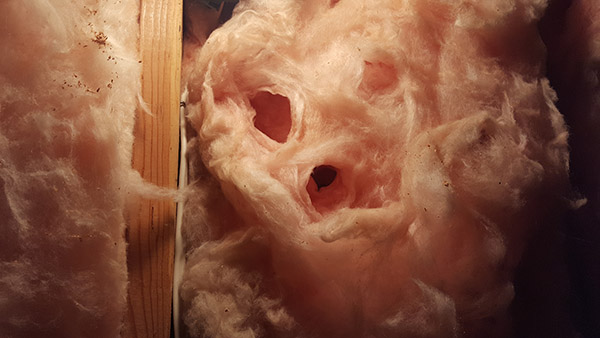
Rat Infestation
When to Remove Existing Insulation
Removing or vacuuming existing attic insulation is not always necessary. In many cases, existing insulation can be used as a base with new material installed over it to restore and improve attic thermal performance. This can reduce project costs by roughly half while keeping usable material out of landfills.
Although insulation removal can be beneficial, many companies misleadingly present full removal as the only way to “do the job right.” Quite often, this increases project costs without improving performance. At Everguard, we prioritize transparency so homeowners can make informed decisions and only pay for the work they actually need.
Full or partial insulation removal is generally recommended in cases involving severe fire, smoke, or water damage, heavy rodent or pest infestation, upcoming attic work requiring unobstructed access, or when installing new batt / rolled insulation. Batt insulation must be installed on a clean, flat surface and cannot be installed over existing loose-fill insulation or significant debris. Blown-in insulation, however, can often be installed over existing batt insulation.
If your existing insulation does not fall into these categories, even if it is old, dusty, or crumbly, there is typically no performance benefit to removing it.
| When to Remove Existing Insulation |
|
|
|
|
|
That being said, we also regularly conduct removals for homeowners who simply want everything cleared for ease of mind — and that’s okay too. Our company prioritizes transparency, so you can make an informed decision for your home without paying for unnecessary services.
Our machinery remains in the truck to keep your home clean
Our Removal Process
At Everguard, we dedicate a full day to insulation removal before returning on a separate day for installation. Unlike many companies that compress both services into a single day, we separate the process to ensure higher-quality workmanship. We know from experience that after spending hours in a hot attic, crews can become exhausted and more prone to rushed or incomplete installation work. That’s why we utilize separately trained removal and installation specialists to ensure each phase of the project receives full attention and care.
Our removal process is thorough and clean; we set up protective containment measures, and the only things traveling through your home are our crew and a long vacuum hose. The debris containment system remains truck-mounted outside your home, while insulation is vacuumed directly into sealed containment bags for a no mess process.
Before with batts
Before with loose fill
We also include complimentary* rodent sealing, disinfecting spray, and air sealing, which you can learn more about by visiting our service pages, or clicking the icons below. Removal pricing is based on attic square footage, insulation depth, and accessibility so you only pay for the level of service your home needs.
We can provide a quote right over the phone — give us a call today to get started.
*Additional charges may apply for homes requiring extensive rodent sealing, air sealing, or disinfecting.
Complimentary Services with Removal
Is Your Batt Insulation Bunched Up Or Uneven?
Batt insulation only performs effectively when it is laid flat on a clean, unobstructed surface. If there is significant debris or existing insulation underneath, its performance is drastically reduced. Luckily, we can often reposition and properly align your undamaged existing batts, then add new blown-in insulation on top to restore and improve thermal efficiency.
Cleaning Your Attic Soon?
The ideal time to install Radiant Barrier insulation is immediately after a clean-out, when the attic is fully accessible. After insulation or storage is put back in place, installation becomes much more difficult, and many contractors will not perform this type of work. To learn how Radiant Barrier can improve energy efficiency and comfort, visit our material page