Los Angeles · Orange · Ventura · Santa Barbara & Surrounding Counties
Cellulose
Our Most Popular Material
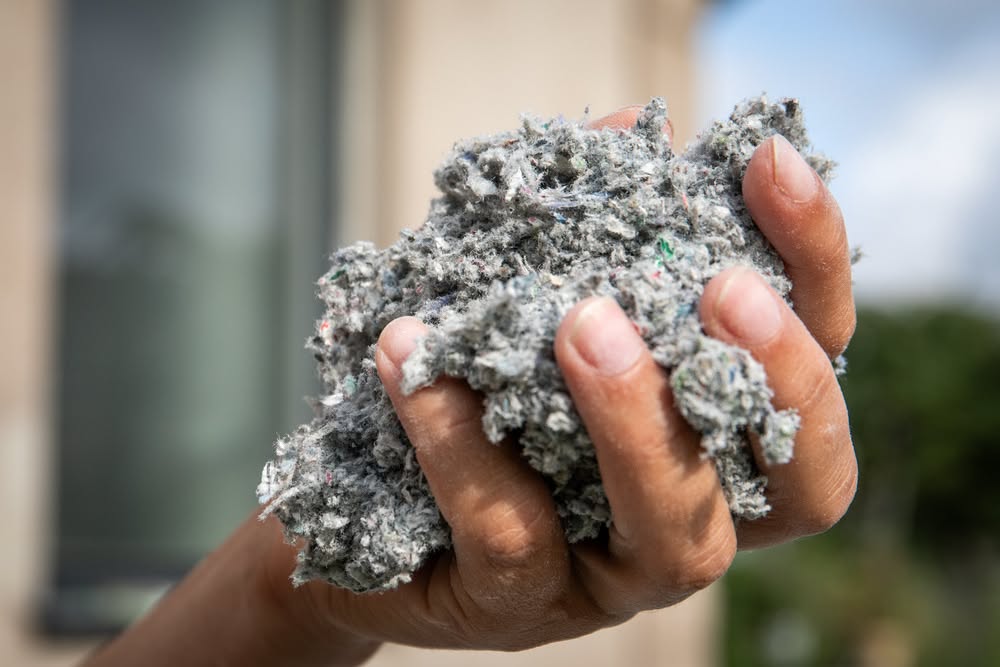
We consider Cellulose the most effective, efficient, longest-lasting, and safest material you can use – It’s our most popular material for a reason! Cellulose has many advantages over Fiberglass; it has a lifetime warranty, is permanently non-flammable, and resistant to rodents, insects, mold, and mildew. It also has soundproofing qualities and does not itch. Best of all, Cellulose is non-toxic, environmentally friendly, and safe to be around, breathe in, and touch, even for those with allergies, asthma, and immune compromise.
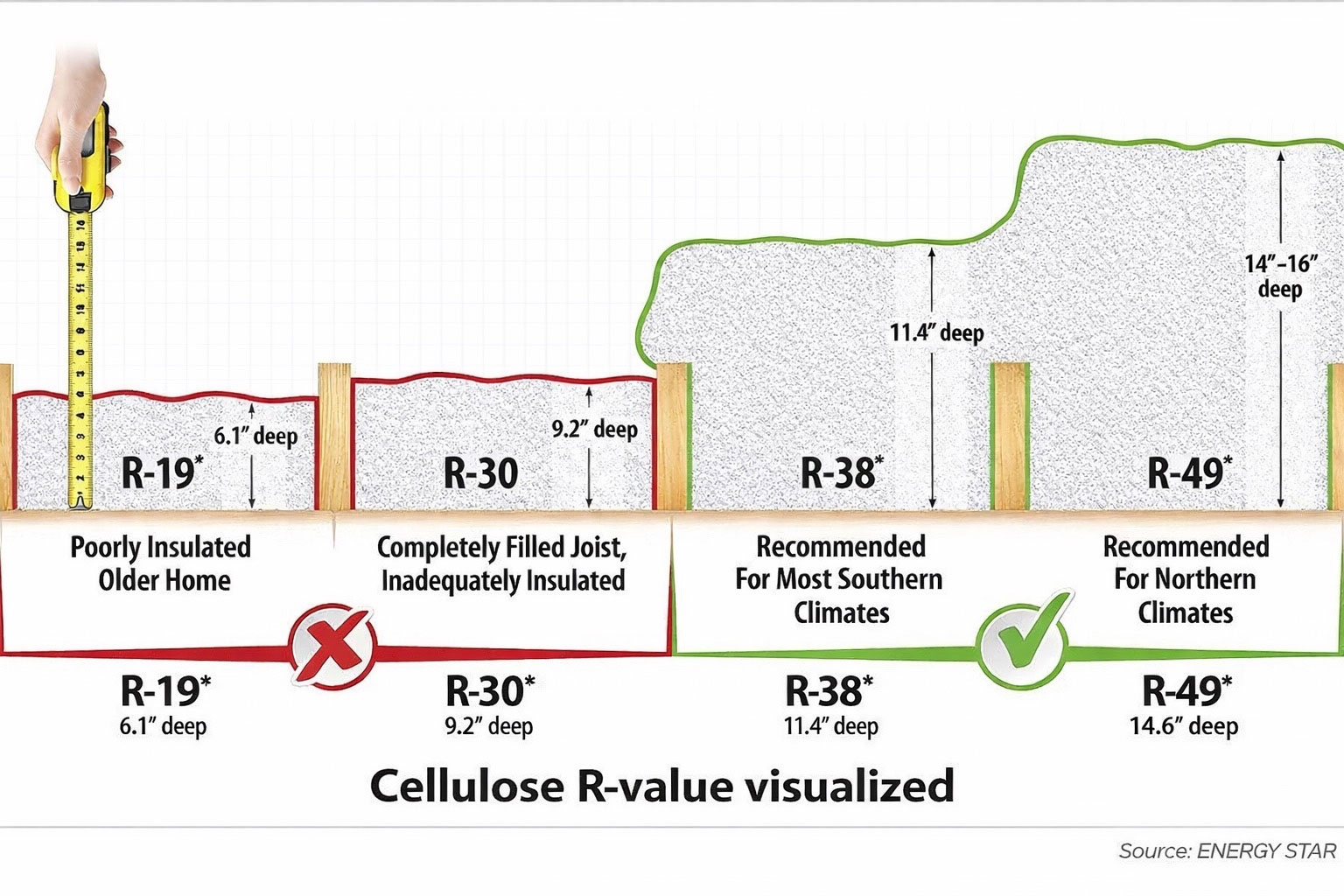
We proudly offer a manufacturer-backed lifetime guarantee that our blown-in Cellulose will never settle, pack, or lose its insulating qualities over the lifetime of the home. Where the debate of quality over quantity is concerned, Cellulose attains an R-38 rating (The desired rating per California building codes) with approximately 10 inches of thickness, whereas Fiberglass needs to be about 16 inches for blown-in Fiberglass, or 13.5 inches for rolled-in Fiberglass to achieve the same performance. This makes Cellulose far more effective per inch.
Cellulose is made from reconstituted wood fiber products, which include newspaper, cardboard, and other upcycled wood-related products. While some would imagine this to be flammable, the Cellulose is treated with a natural and non-harmful chemical called Borate, or Boric Acid, to be permanently fire resistant. Cellulose carries an ASTM Class 1 rating and meets specifications set by federal, state, and local building authorities for being non-flammable. You can actually hold a match or torch to the product and it will not burn!
An additional benefit of the Cellulose being treated with Borate is that it becomes resistant to insects, rodents, molds, mildew, and fungus. Rodents and pests find the Borate treatment unpleasant to be around because it irritates and dries out their little lungs. And because it’s a loose-fill product, rodents cannot nest, tunnel, or even effectively walk across Cellulose because their little feet fall through it like powdered snow, causing them to avoid spending time in your home altogether – Safe, ethical, and natural pest and rodent repellent! Small water leak in the attic? No problem! The Borate also helps Cellulose dry faster without damage, before mold, mildew, or fungus can generate. Cellulose is also very earth-friendly in that it is made from almost entirely recycled products. Cellulose also has excellent sound-reducing qualities. Homeowners frequently report a quieter home after it’s insulated.
Cellulose is our most popularly installed insulation — and for good reason. We’ve been installing it for over 65 years, and we’ve seen firsthand how well it performs consistently over time. It’s a one-time installation you can rely on for long-term thermal performance, safety, and built-in protections that many homeowners don’t even realize insulation can provide.
Compared to Fiberglass, Cellulose offers a wide range of advantages. It comes with a lifetime warranty, is permanently non-flammable, and naturally resists rodents, insects, mold, and mildew. It also improves home comfort with excellent soundproofing and is non-itchy. Best of all, cellulose is non-toxic, hypoallergenic, environmentally friendly, and safe to be around, breathe in, and touch — even for those with allergies, asthma, or immune sensitivities.
Benefits of Cellulose
Complete, Gap-Free Coverage
- Lifetime guarantee
- Never settles, packs, or loses its insulating qualities
- Non-toxic, safe
- Allergy, asthma, & immune compromise friendly
- No itching
- Rodent resistant
- Safely, ethically, and naturally
- Insect resistant
- Safely, ethically, and naturally
- Mold, mildew, & fungus resistant
- Resists light water damage
- 11.4” to attain an R38
- Soundproofing
- Soft material
- Non-flammable
- Easy to work in for attic upkeep
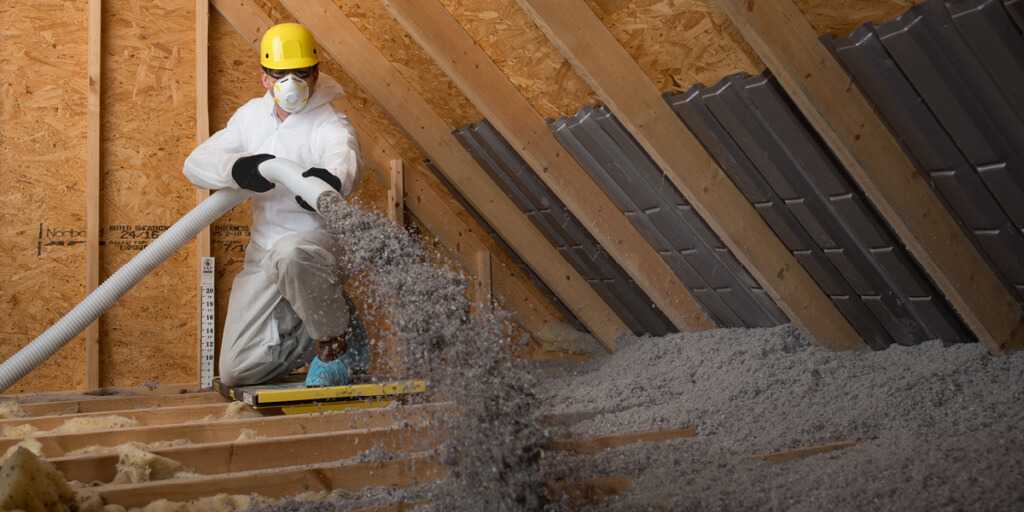
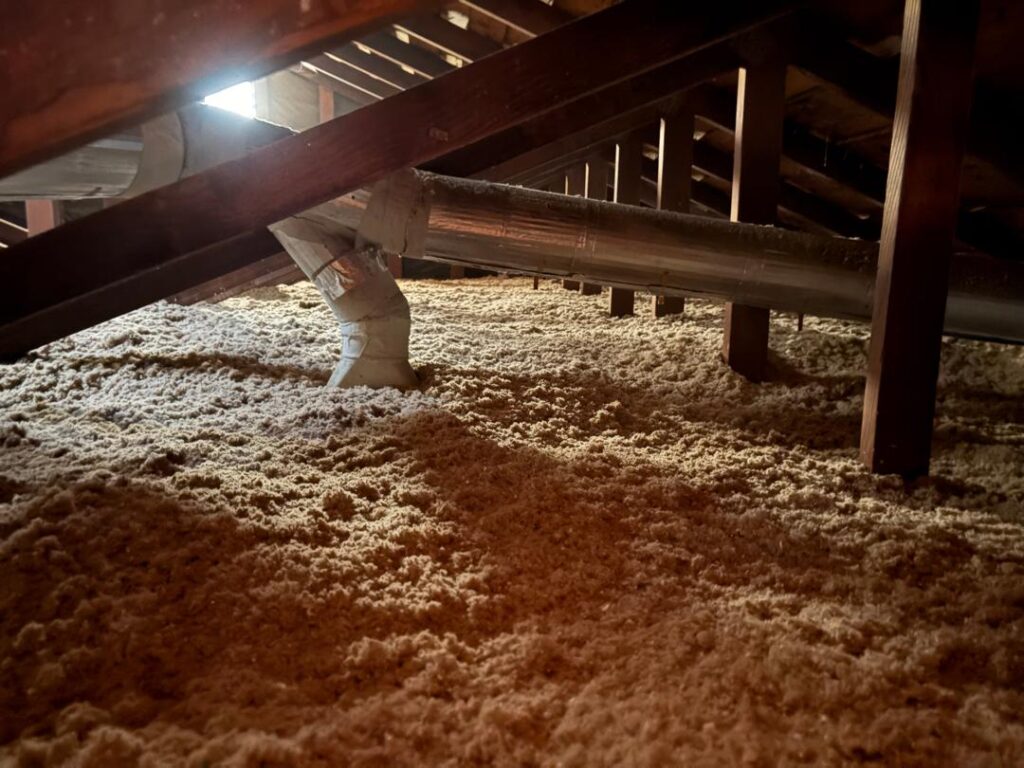
A key benefit of Cellulose is its ability to provide complete, thorough coverage of the attic. As a loose-fill material, it naturally conforms to irregular spaces, creating what the industry calls a monolithic fill — a continuous, gap-free layer of insulation. This allows it to seamlessly wrap around joists, plumbing, pipes, and conduits, improving surface coverage and boosting performance by 35–40% compared to traditional batt insulation.
Unlike rolled or batt products, which cannot reach tight spaces and may settle over time, blown-in Cellulose will not compress, settle, or lose its insulating qualities. That’s why we proudly offer a manufacturer-backed lifetime guarantee: your Cellulose insulation will maintain its performance for the life of your home.
Fire Resistance
Cellulose is made from reconstituted wood fiber products, including newspaper, cardboard, and other upcycled wood-related materials. While some might assume this makes it flammable, properly treated Cellulose will not sustain a flame. In fact, you can hold a match or torch to it, and it will resist combustion rather than ignite. Unlike Fiberglass, which quickly melts under high heat, Cellulose is treated with borate (also called boric acid), a naturally occurring mineral that permanently increases its fire resistance.
This treatment gives Cellulose an ASTM Class 1 fire rating and ensures it meets federal, state, and local building codes for fire safety. The fire resistance is permanent — it won’t wear off — and is built into the material for the life of your home.
Resistance to Pests and Mold
An additional benefit of Cellulose being treated with borate is its natural resistance to insects, rodents, mold, mildew, and fungus. Rodents and pests find the borate treatment unpleasant because as a desecant, it irritates and dries out their respiratory systems. Since Cellulose is a loose-fill material, they cannot make nests or tunnels — the material simply collapses under their digging efforts. Rodents also cannot move effectively across Cellulose; their feet sink into it like powdered snow, so they tend to avoid spending time in your home altogether.
Just like humans, rodents avoid spaces where they are not comfortable. It’s a natural, ethical deterrent, not a chemical pesticide approach.
Small water leak in the attic? No problem! Borate treatment helps Cellulose dry quickly without losing its insulating integrity, preventing mold, mildew, or fungus from developing during the drying process.
Eco-Friendly and Comfortable
Cellulose is made from almost entirely recycled materials, making it one of the most environmentally responsible insulation options available. Unlike some insulation products, it does not contain heavy chemicals such as formaldehyde, making it an excellent choice for homeowners seeking the safest, cleanest option to protect indoor air quality. It also provides excellent sound reduction, and many homeowners report a noticeably quieter home after installation.
Longevity, superior thermal performance, safety, cost-effectiveness, and built-in protections — these are the reasons Cellulose remains our most well-rounded and trusted insulation material.
For more information on cellulose, check out these websites:
Working in an Attic After Loose-Fill (Blown-In) Insulation
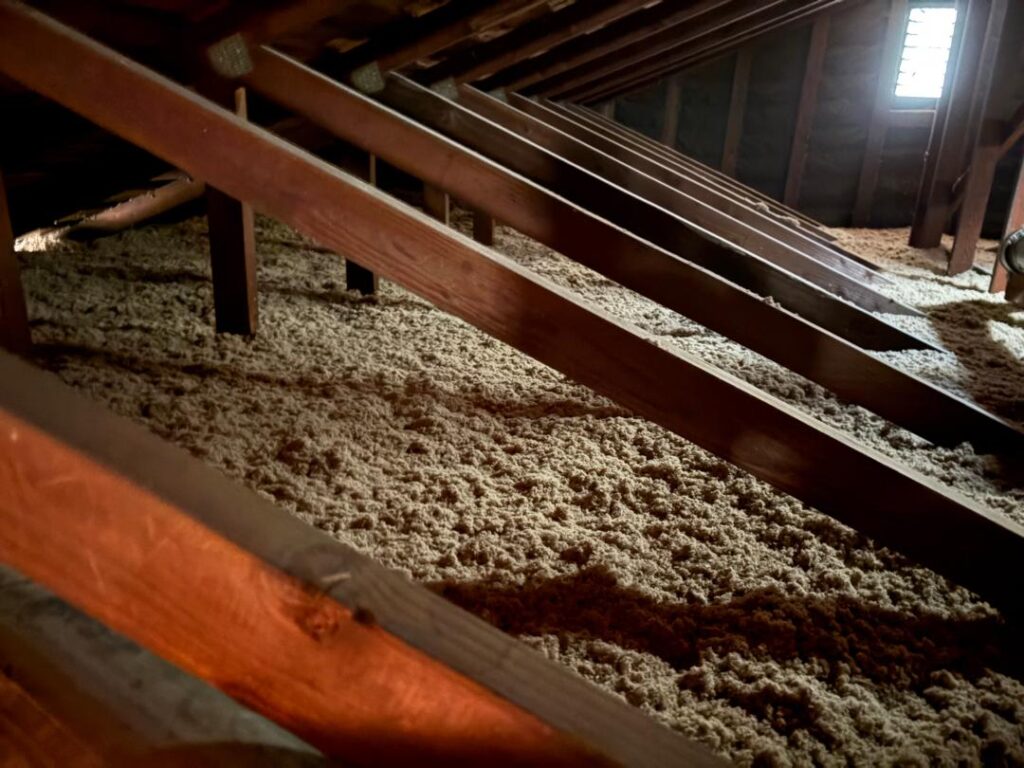
Homeowners often ask how easy it is to work in the attic after loose-fill (blown-in) insulation is installed. The good news: it’s much easier than most people expect.
Loose-fill materials—such as Cellulose and Rockwool—are designed to remain soft and movable. They will not pack down or lose their insulating performance from normal attic maintenance movement. If you need access to wiring, recessed lighting, HVAC components, or other areas, the material can simply be brushed or shifted aside temporarily. It does not harden or become damaged from typical attic work, and it is non-itchy, low dust, and comfortable to handle.
For a stable surface, you can lay a sheet of plywood over the area, walk on it while completing your project, and then remove it without causing harm to the insulation.
Compared to traditional Fiberglass batts, loose-fill insulation is significantly safer to work around. Fiberglass contains spun glass fibers that can irritate skin and lungs and requires protective clothing and a respirator when disturbed due to its hazardous warning label.
As with any attic, you should always step on the ceiling joists (wooden beams) to avoid stepping through the ceiling, regardless of insulation type. We’re also happy to clearly mark joists, HVAC equipment, and other key maintenance areas with flags upon request to make future attic access even easier
Working in an Attic After Loose-Fill (Blown-In) Insulation
Homeowners often ask how easy it is to work in the attic after loose-fill (blown-in) insulation is installed. The good news: it’s much easier than most people expect.
Loose-fill materials—such as Cellulose and Rockwool—are designed to remain soft and movable. They will not pack down or lose their insulating performance from normal attic maintenance movement. If you need access to wiring, recessed lighting, HVAC components, or other areas, the material can simply be brushed or shifted aside temporarily. It does not harden or become damaged from typical attic work, and it is non-itchy, low dust, and comfortable to handle.
For a stable surface, you can lay a sheet of plywood over the area, walk on it while completing your project, and then remove it without causing harm to the insulation.
Compared to traditional Fiberglass batts, loose-fill insulation is significantly safer to work around. Fiberglass contains spun glass fibers that can irritate skin and lungs and requires protective clothing and a respirator when disturbed due to its hazardous warning label.
As with any attic, you should always step on the ceiling joists (wooden beams) to avoid stepping through the ceiling, regardless of insulation type. We’re also happy to clearly mark joists, HVAC equipment, and other key maintenance areas with flags upon request to make future attic access even easier.