Los Angeles · Orange · Ventura · Santa Barbara & Surrounding Counties
Fiberglass
Our top pick for Subfloors
and Kneewalls
Fiberglass Insulation: An Overview
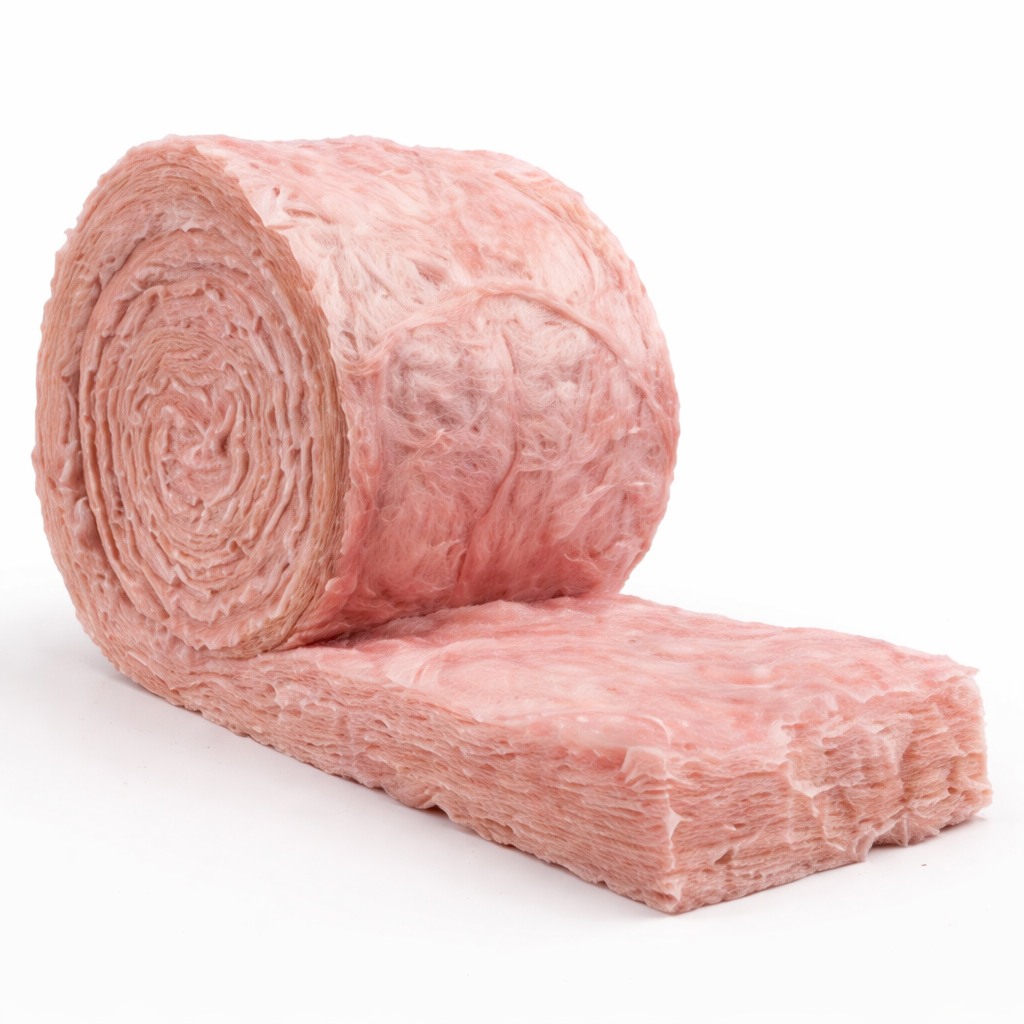
All insulation material types have their best-suited time, place, and use; Fiberglass is primarily used in new construction. Many homeowners typically feel they want rolled insulation, but once they do the research, they discover otherwise. Fiberglass is available in two forms: as batting (rolled) or as a loose-fill (blown) material. Whether rolled or blown, Fiberglass has several negative characteristics of significant concern. Although we regularly, happily install Fiberglass for homeowners who prefer it, it is not our top recommendation. Please do your research before using Fiberglass!
All insulation materials have a time, place, and purpose. Fiberglass insulation is most commonly used in new construction and certain retrofit applications. Many homeowners initially believe rolled insulation is the best option, but after researching performance, longevity, and alternatives, they often discover that other materials may be a better fit for their existing, retrofitted home.
Fiberglass is available in two forms: batting (rolled) and loose-fill (blown-in) — Which is often mistaken for blown-in Cellulose or Rockwool. While both options can be appropriate in specific situations, Fiberglass has several characteristics that are important to understand when considering it for your home. Although we regularly and happily install Fiberglass for homeowners who prefer it, it is not typically our top recommendation.
Material Characteristics & Health Considerations
Fiberglass is made up of glass fibers that are very small, rigid, and sharp. On account of this, all Fiberglass products have a hazard/warning label on them clearly relating to the danger of cancer, upper respiratory irritation, and other related illnesses. Anyone who has ever worked with Fiberglass can attest to the terrible “itch” that it causes. Contractors or workers are often hesitant or charge more to work in an attic that has Blown in Fiberglass.
Homeowners often feel that the attic area is separate from their home’s living quarters, but the increased use of recessed lighting, HVAC units, and other devices located in the attic has led to a surprising amount of air interaction between the attic area and the living quarters below. When a home develops health issues for the occupants, environmental companies are quick to remove Fiberglass insulation from the attic or at least blow Cellulose insulation over the Fiberglass to seal and encapsulate it.
Fiberglass insulation is made from very small glass fibers that are rigid and sharp. Because of this, Fiberglass products carry health and safety warnings related to skin irritation and respiratory exposure during handling and installation. Anyone who has worked with Fiberglass is familiar with the itching caused by these fibers, which is why protective clothing and respiratory equipment are required. Some contractors may be hesitant to work in attics containing blown-in Fiberglass due to these conditions and the way that the loose-fill version of this product may stick to clothing.
While attics are often thought of as separate from living spaces, modern homes increasingly rely on attic-based systems such as recessed lighting, HVAC equipment, and ductwork. These features allow air movement between the attic and the living space below. For this reason, environmental remediation companies often remove Fiberglass insulation—or encapsulate it by blowing Cellulose over it—when addressing indoor air quality or health-related concerns.
Performance & Longevity
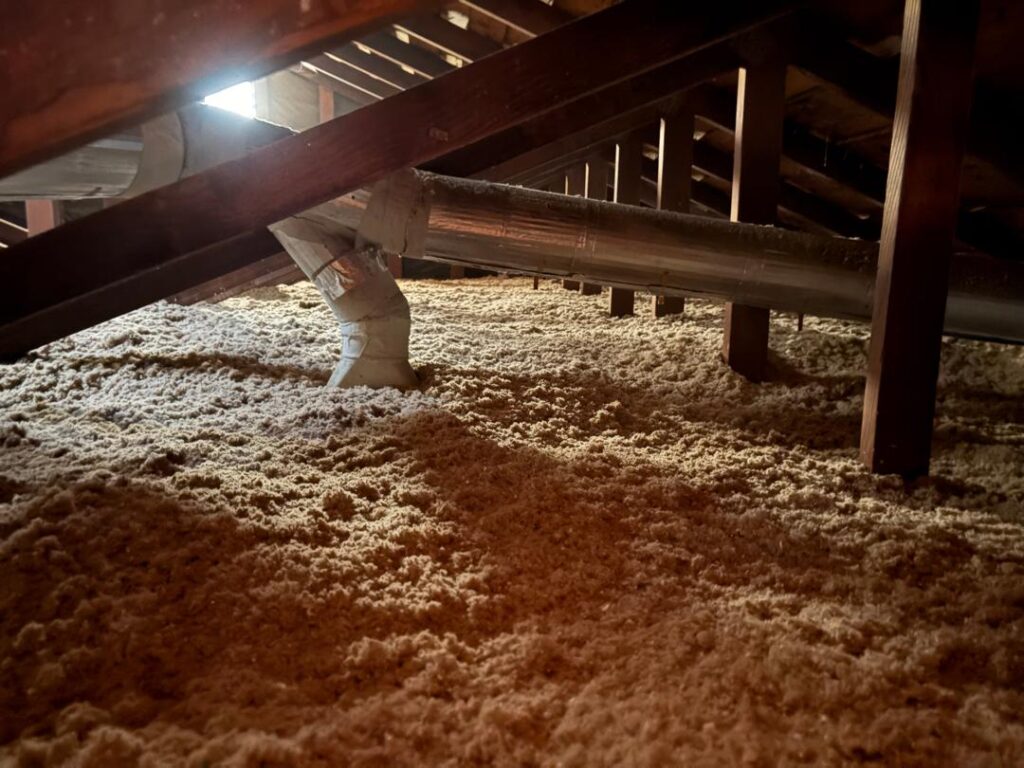
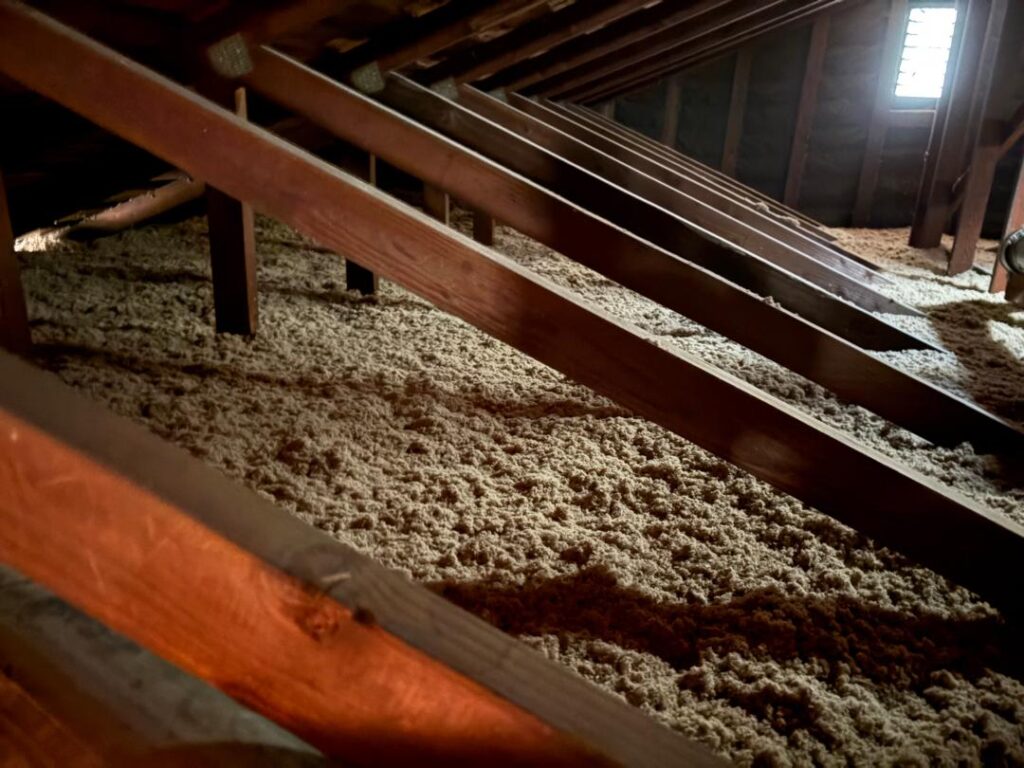
Fiberglass insulation doesn’t carry a lifetime warranty because it tends to settle and compress over time. Like the cotton-candy texture it resembles, Fiberglass is manufactured to be fluffed up, which naturally leads to settling. While rolled Fiberglass settles less than outdated blown-in types (blown-in Fiberglass is often mistaken for Cellulose), it’s applied in strips between ceiling joists – leaving gaps around plumbing, piping, and conduit. As a result, it provides an overall less effective, compromised seal. This lack of coverage and seal leads to an unfortunate 35-40% loss of performance as compared to blown in Cellulose or Rockwool.
Fiberglass is less efficient as compared to Cellulose or Rockwool; it must be 16 inches for blown-in Fiberglass, or 13.5 inches for rolled-in Fiberglass in order to produce an R-38 rating, while Cellulose and Rockwool only need to be 12.25″ in order to attain the same R-38 performance.
Fiberglass insulation does not carry a lifetime warranty because it naturally settles and compresses over time. Like the cotton-candy texture it resembles, Fiberglass relies on being fluffed up to trap air, which is what provides its insulating value. As it settles, that performance gradually declines.
Rolled Fiberglass generally settles a little less than blown-in Fiberglass products (which are often mistaken for Cellulose). However, batting is installed in prefabricated strips between ceiling joists, leaving a compromised fit due to gaps around plumbing, wiring, and other obstructions that the rigid material is unable to fully encompass. Because Fiberglass is installed between joists (wooden beams) instead of covering joists, there is a further lack of complete coverage. Although homeowners may enjoy the aesthetic value that Fiberglass provides which is often described as ‘cleaner,’ ‘‘neater,’ or ‘grid-like’ visually in not covering the joists, there is a very real drawback – These gaps reduce coverage and compromise the air seal, resulting in an estimated 35–40% loss of effective performance compared to blown-in materials like Cellulose or Rockwool, which naturally conform to irregular spaces as a monolithic fill. Although Fiberglass can appear aesthetically neater and comes in exciting pink and yellow colors, when it comes to your attic–which most people only visit 1-3 times a year– we advise picking thermal efficiency over the beauty contest!
Resistance & Safety Considerations
Fiberglass does not have any insect or termite-resistant qualities. In fact, Fiberglass makes a splendid home for rodents and vermin. Quite often, we find evidence of rats and mice living in the Fiberglass. Given some moisture, Fiberglass also provides an excellent media for mold & mildew to foster and grow in. By comparison, because of its use of Boric Acid as an active ingredient, Cellulose and Rockwool are both mold, mildew, and fungal resistant as well as rodent and insect resistant. Cellulose is also 57% more flame spread resistant than Fiberglass, and Rockwool is completely fireproof, whereas Fiberglass melts in a fire and leaves other surfaces open to flames, especially when paper-backed. These factors can make all the difference for you and your home’s safety; More time to evacuate, and more time for firefighters to respond in the event of an emergency.
In summary, while Fiberglass is an option, it’s not the best choice because it’s less thermally effective, loses its insulating qualities over time, is hazardous, doesn’t offer any resistancies, and is a higher cost than other more effective alternatives.
You might ask, Why do we even bother offering a product which we do not recommend? Because all insulation material types have their best-suited time, place, and use. We often utilize Fiberglass for kneewall and subflooring (where loose-fill isn’t an option), for adding a barrier around access doors, and for various custom fits. We are always happy to collaborate on the best combination of materials to fit the needs of your home!
Fiberglass insulation does not provide resistance to insects, rodents, mold, or mildew. In fact, it often becomes a nesting material for rodents, and when exposed to moisture, it can support mold and mildew growth.
Cellulose and Rockwool, by contrast, are resistant to rodents, pests, mold, mildew, and fungi. Cellulose is also 57% more resistant to flame spread than Fiberglass, and Rockwool is completely non-flammable. Fiberglass can melt in a fire—especially paper-backed products—leaving surrounding materials more vulnerable to flames. These differences can impact evacuation time and fire response during an emergency.
Why We Still Offer Fiberglass
Fiberglass does not have any insect or termite-resistant qualities. In fact, Fiberglass makes a splendid home for rodents and vermin. Quite often, we find evidence of rats and mice living in the Fiberglass. Given some moisture, Fiberglass also provides an excellent media for mold & mildew to foster and grow in. By comparison, because of its use of Boric Acid as an active ingredient, Cellulose and Rockwool are both mold, mildew, and fungal resistant as well as rodent and insect resistant. Cellulose is also 57% more flame spread resistant than Fiberglass, and Rockwool is completely fireproof, whereas Fiberglass melts in a fire and leaves other surfaces open to flames, especially when paper-backed. These factors can make all the difference for you and your home’s safety; More time to evacuate, and more time for firefighters to respond in the event of an emergency.
In summary, while Fiberglass is an option, it’s not the best choice because it’s less thermally effective, loses its insulating qualities over time, is hazardous, doesn’t offer any resistancies, and is a higher cost than other more effective alternatives.
You might ask, Why do we even bother offering a product which we do not recommend? Because all insulation material types have their best-suited time, place, and use. We often utilize Fiberglass for kneewall and subflooring (where loose-fill isn’t an option), for adding a barrier around access doors, and for various custom fits. We are always happy to collaborate on the best combination of materials to fit the needs of your home!
While Fiberglass is an option, it is generally less thermally effective over time, offers fewer protective properties, and often costs more than alternative materials that perform better in retrofit applications. That said, Fiberglass absolutely has earned its role in select, practical areas of the home.
We commonly install Fiberglass into attics – but in our many years of experience, instead recommend Fiberglass primarily for kneewalls, subflooring, access doors, and other areas where loose-fill insulation is not practical. Every home is different, and we are always happy to help determine the best combination of insulation materials to meet your home’s specific needs, goals, and budget.